
Latest news from BNOS and across the neuro-oncology network

Empty leather chairs in a row with the words Dragons' Den beneath

The Research Subcommittee’s Dragons’ Den Returns

By News

We are excited to announce the return of the BNOS Research Subcommittee’s Dragons’ Den to support the transition to research independence of talented early career academic researchers and clinical trainees within UK brain tumour research. 

They’ll be holding their second round of virtual mock interviews via Microsoft Teams on Monday 30 January 2023 to support academic and clinical early career researchers to increase competitiveness for fellowship bids.

Feedback to candidates will be distinct from host laboratory/institutional fellowship support and focused on identifying knowledge gaps in neuro-oncology which may form independent research niches.

The format will consist of a 10-minute presentation by the candidate, followed by a 30-minute Q&A session and feedback.

The panel will consist of 2-3 Research Subcommittee members based on academic/clinical expertise.

Eligibility:

  • Post-doctoral researchers, PhD students or clinical trainees who are planning to submit independent fellowship bids in 2023
  • Have already identified a fellowship scheme to target
  • Have already identified a host laboratory and UK host institution

How to apply:

  • Using this template, send a 2-page overview of unmet clinical need, research objectives and research plan 
  • An accompanying 2-page CV
  • And 1-page publication record

To administrator@bnos.org.uk by 5pm on 23 January 2023

For full details please see the event flyer.
BNOS 2022: Patient and Carer Edition

By News

Following the success of our Annual Scientific Meeting held in Liverpool this June, we are delighted to be holding our first online patient and carer event to discuss some of the highlights.

THURSDAY 6TH OCTOBER | 6pm – 8pm | ONLINE

The aim is to present a selection of topics from the conference that are of interest to people living with brain tumours and their carers.

The format will be 10-minute presentations, followed by a discussion with a panel of experts and questions from the audience.

BOOK YOUR PLACE NOW

Programme:
6pm  Introduction and welcome. Andrew Brodbelt, Neurosurgeon, Liverpool
6:05 – 6:15Neuropathology: The New World Health Organisation (WHO) classification. Changes and molecular testing in how brain tumours are described. What does this mean for patients, and for their treatment. Jill Davies, Neuropathologist, Nottingham     
6:15 – 6:30Panel discussion and questions
6:30 – 6:40The patient experience: Future developments / what might good look like? Anna Crofton, Cancer lead nurse, Liverpool
6:40 – 6:55Panel discussion and questions
6:55 – 7:05Novel and emerging surgical technologies: What that means for patients. Ryan Mathew, Neurosurgeon, Leeds
7:05 – 7:20Panel discussion and questions
7:20 – 7:40New therapies for patients with Glioblastoma:
1. Tumour Treating Fields, what are they and how do they work? Farouk Olubajo, Neurosurgeon, Liverpool
2. Dendritic cell therapy, what is it, how does it work, and is it available? Prof Keyoumars Ashkan, Neurosurgeon, London
7:40 – 7:55Panel discussion and questions
7:55 – 8:00Closing remarks and summary. Andrew Brodbelt, Neurosurgeon, Liverpool

Our expert panel:
• The session speaker
• Michael Jenkinson, Professor of Neurosurgery, Chair NCRI brain tumour group, Liverpool
• Paul Grundy, Neurosurgeon, President BNOS, Southampton
• Jill Sokratous, Clinical Nurse Specialist, Liverpool
• Helen Bulbeck, Brainstrust
• Louise Dulley, Clinical Oncologist, London
• Kaj Mistry, Brain tumour ambassador, The Brain Tumour Charity
• Chair Andrew Brodbelt, Neurosurgeon, Liverpool

We are very grateful to The Brain Tumour Charity for their help in running the event, and for the support of Brainstrust, The International Brain Tumour Alliance, and Yorkshire’s Brain Tumour Charity.

DOWNLOAD THE EVENT FLYER

A keyboard with the word JOB opportunities on one of the keys

Job opportunity: Lecturer at Peninsula Medical School (Research focussed), Plymouth

By News
The Peninsula Medical School (PMS) is a young successful and growing medical school and is part of the Faculty of Health within the University of Plymouth. Within its Brain Tumour Research centre of excellence, which has had its funding renewed for another 5 years, we are looking for an experienced lecturer to join the centre. This is an open ended/tenured post.

Based in the Faculty of Health, the Peninsula Medical School is committed to three core aims: outstanding clinical education; strong social engagement; and world-class research. A key strength is a close relationship with NHS partners. The South West offers healthcare and learning opportunities of exceptional quality; Derriford is one of Europe’s largest hospitals.

We are seeking for talented and highly motivated applicants with relevant track records. You must have a PhD, postdoctoral experience with a publication tack record and some experience in supervising graduate students. The Brain Tumour Research centre of excellence focusses on low grade tumours and currently hosts three groups and roughly 25 researchers including PhD students.  The charity Brain Tumour Research will provide consumable support. You will be based in the state-of-the-art Derriford research facility.  Mentorship by a Senior Researcher and support are an integral part of the post.

Although the position is predominantly research-focussed, you will also be expected to contribute to teaching activities within the medical school up to a maximum 30% teaching activity. These activities will include delivering interactive human physiology sessions, Student-Selected Unit and academic tutoring.

For an informal discussion to find out more about the role then please contact Professor Clemens Oliver Hanemann by email oliver.hanemann@plymouth.ac.uk or telephone 01752 437 418.

This is a full-time position working 37 hours per week on a permanent basis subject to the usual probation period.

Flexible working options including job share will be considered.

Closing Date: 12 Midnight, Monday 10th October 2022

FIND OUT MORE

GlioModel consortium

By News

GlioModel is a collaboration of neuro-oncology research groups from 8 participating UK institutions, each housing one or more glioblastoma (GBM) preclinical models that span a range of in vitro through ex vivo to in vivo experimental systems.  We are working together to show how functional assessment of candidate pathogenic molecules or pathways across multiple models can be used to expedite preclinical target validation and give more in depth insight into mechanisms underpinning malignant phenotypes. In this context models refers not just to specific cell lines but also the mode/environment in which cells are cultured or maintained.

The GlioModel consortium is led by BNOS Research Subcommittee member Dr. Lucy Stead and she spoke at BNOS2022 about the new initiative. 
FIND OUT MORE


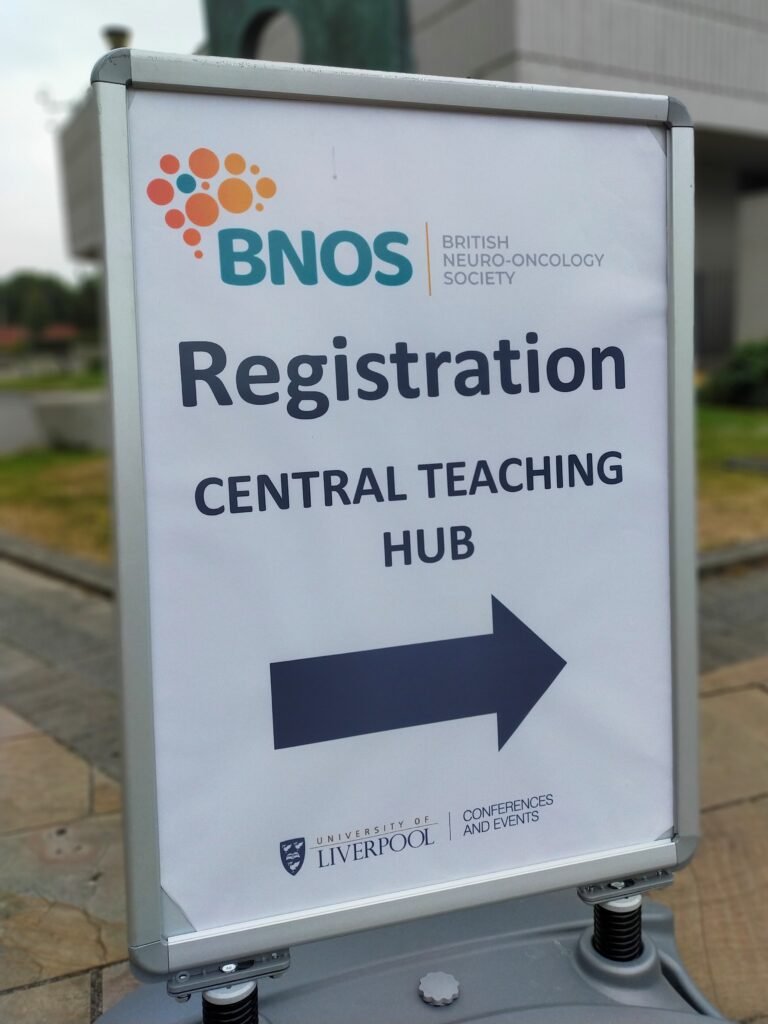
BNOS Liverpool 2022

By News

BNOS Liverpool 2022 was the first in person meeting since the 2019 meeting prior to COVID. The meeting was held on a backdrop of rapidly rising prices (fuel hit 199.9 / l) and a national rail strike which reduced services throughout.

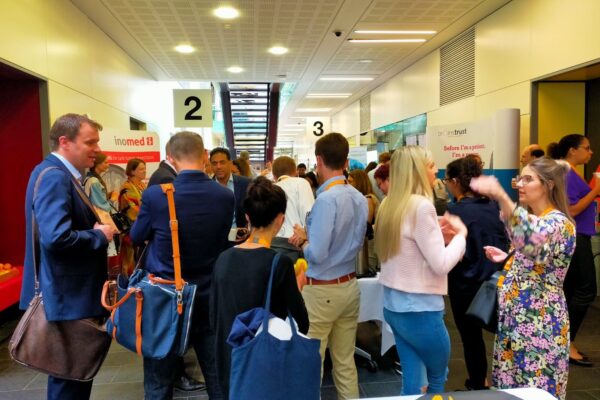
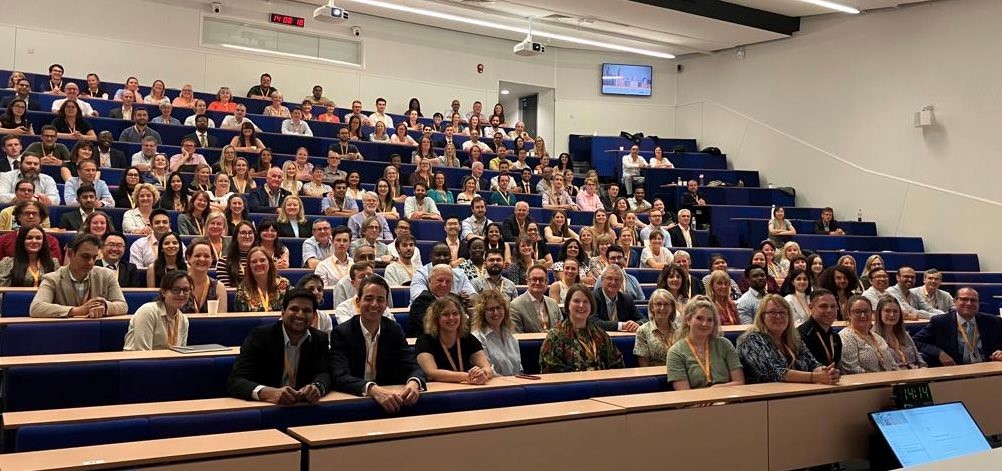
The weather in Liverpool was superb, and attendance was over 325 people over the 3 days. Those who could not make it by train presented virtually and we were able to live stream sessions on the Thursday, offering a new dynamic to the conference – a positive following the pandemic. The whole meeting was recorded, so that the invited speakers and sessions could be put on the BNOS members area of the website as an educational resource in due course. Twitter was the social media platform of choice and was encouraged, explained, was used throughout, and prizes awarded for the best photo and most liked tweet (announced on Twitter). Paper was discouraged, and the programme, abstracts, and supplementary materials were all on line.

There were three educational sessions on the Wednesday morning. Standardisation, with Sam Mills talking about the specifics of radiology, Catherine McBain the difficulties in oncology and personalised medicine, and Fiona McKevitt highlighting the management of tumour related epilepsy. The interactive video educational session provided a chance to meet the Attend Anywhere team, and Jacqui Ball then challenged us with a breaking bad news role play by video. The third session discussed preclinical brain tumour modelling, and ended with a lively discussion.

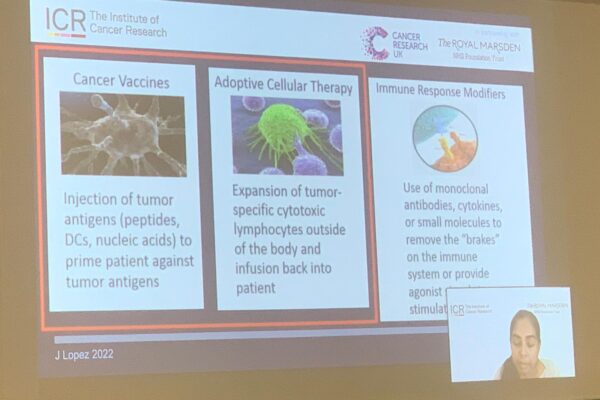
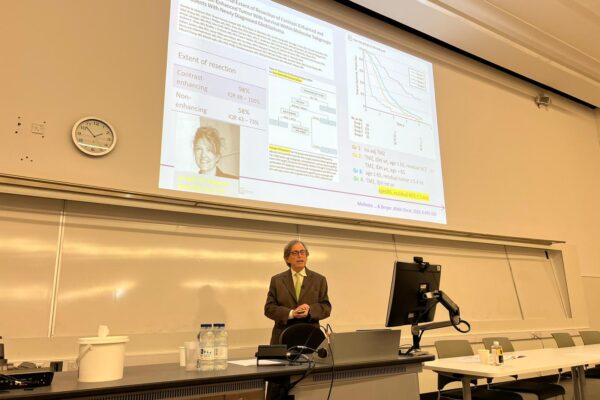
The conference then opened with an engaging talk from Roger Stupp, entitled Clinical Trials in Brain Tumours, past, present and future, which provided an excellent overview and helped us to understand where we are now, and how important trials are to our advancement of treatment for our patients. The biggest issue with the afternoon sessions on Neurosurgery with Ryan Mathew, Pathology with Kathreena Kurian and Juanita Lopez, Metastases with Mihaela Lorger and Sherise Ferguson, and a free paper session on basic science was to know which of the parallel sessions to attend!

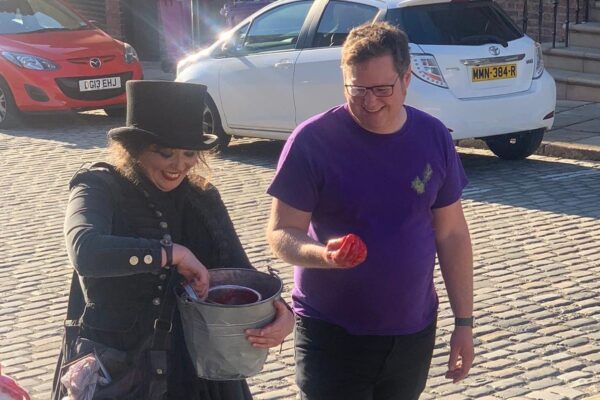
After the conference finished for the day, many delegates went on the Shiverpool haunted (educational) walking tour. Few of us will forget the ‘Green Demon let us pass’ or the monument to the slave trader buried sitting upright with a winning hand of cards! The evening then moved to the stunning 13th floor of the new Spine building, with spectacular views across the city.

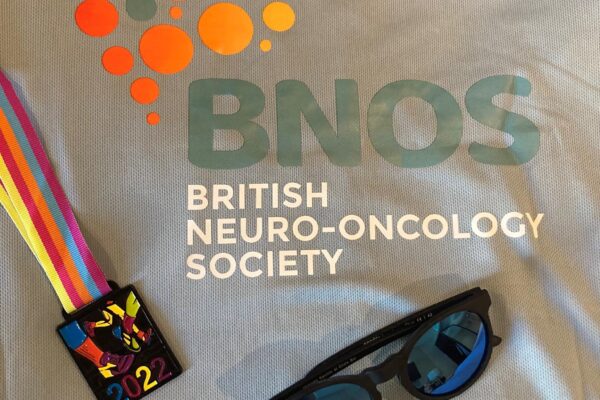
Thursday started with the first ever BNOS fun run along the stunning Liverpool waterfront. The 48 runners (58 entered) had perfect conditions, sunny, slightly cool, with the tide in. Paul Brennan won the men’s 5 Km and Noemia the women’s 5 Km. Natalie Long was the overall winner of the 10 Km race with Joe Keeting winning the men’s 10 Km.

The conference itself had three parallel sessions going for most of the day. The clinical trials session had talks from Juanita Lopez and Anna Olsen Brown, and Roger Stupp provided an insight into some of his tips on running a successful trial.  The session finished with an exciting talk from Ashkan Keymouras on the results of the dendritic cell vaccine trial. Igor Vivenco led the basic science session by talking about oncogenes in glioblastoma. Throughout the day there were a series of social science sessions highlighting innovative interventions to improve quality of life. These included prehabilitation, neuropsychology, patient pathways, cognitive evaluation, and rehabilitation. These were well received and attended by a complete range of delegates. A Paediatric session with Nicky Thorpe, and a further neurosurgery session, with Ryan Mathew, led up to lunch and a presentation from Novocure (a platinum sponsor of the meeting). After a review of the science behind tumour treating fields, they talked about how patients and clinicians need to ask for this treatment to be able to get better access in the UK.

From left: Andrew Brodbelt (BNOS Treasurer and BNOS 2022 organising committee), Paul Grundy (BNOS President), David Bolton, Anna Crofton, Professor Roger Stupp

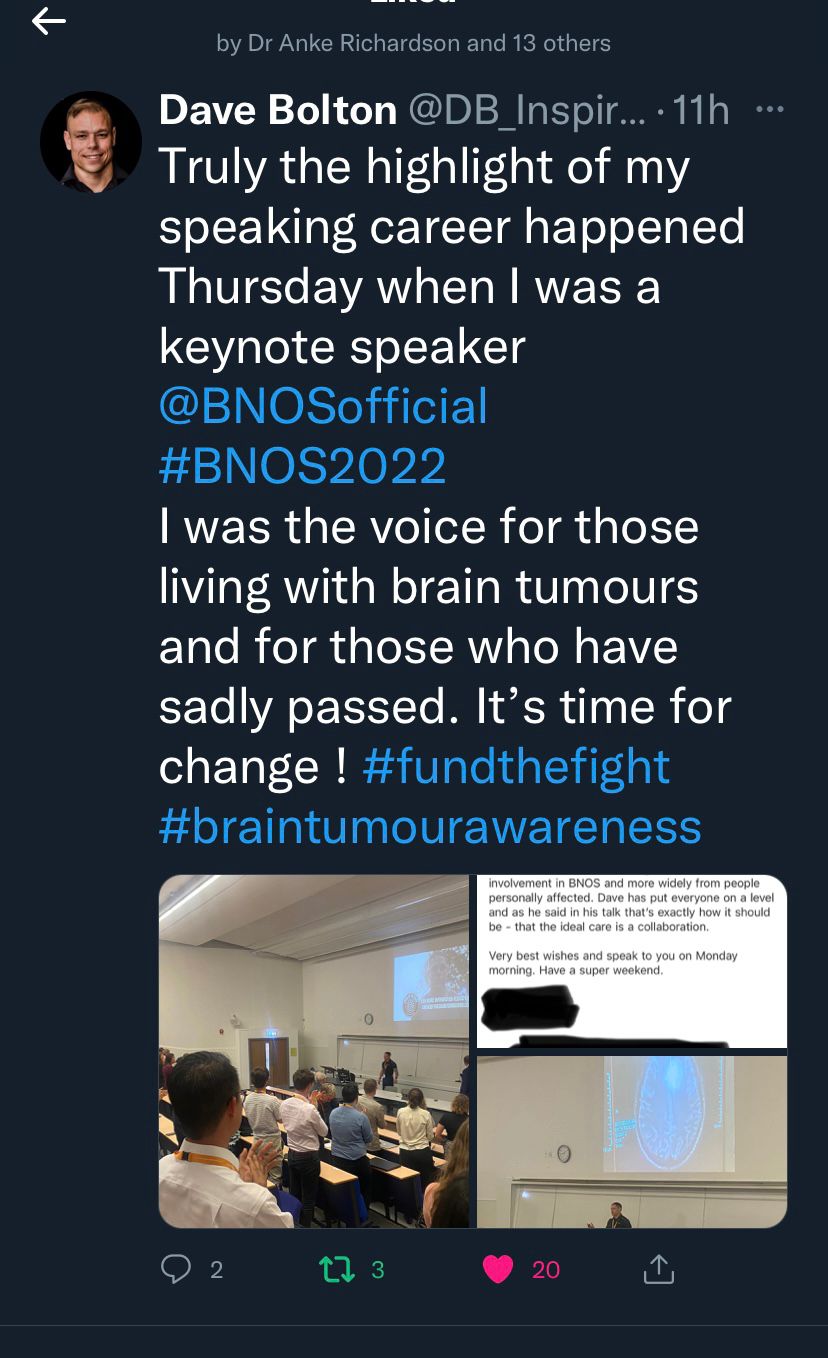
Thursday afternoon started with an exceptional talk from David Bolton. He talked honestly and openly about his life story (to date) and his ability to cope with adversity. He spoke positively about the importance of a partnership with the clinical team and how this has helped him in living well with his disease. This really provided a lesson both in caring for our patients but in our own personal lives as well.  The audience gave him a standing ovation. Kathreena Kurian then led out a glioma session, followed by a free paper session. There was a talk from the Care Oncology Clinic about proprietary drug treatments, with interest from the audience for a clinical trial and highlighted some scepticism and the need for further rigorous scientific investigation.

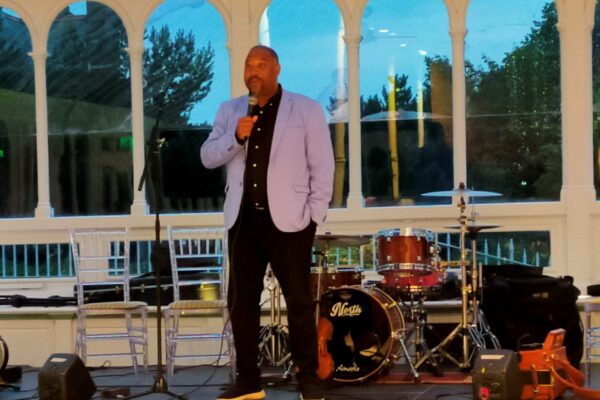
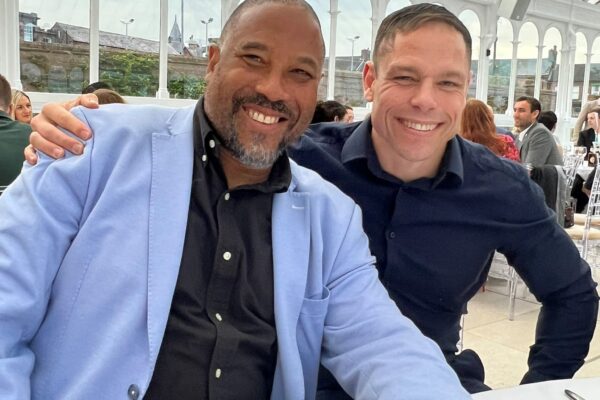
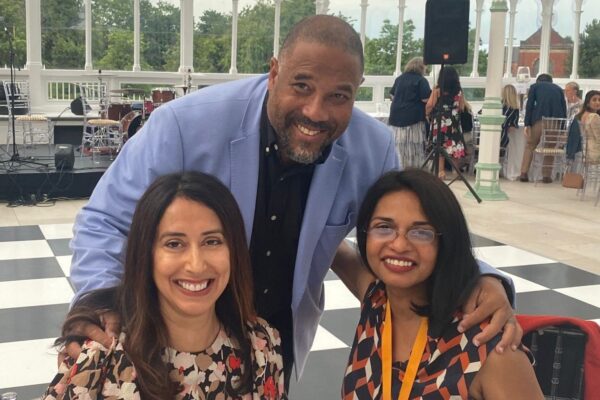
The evening ended by a conference dinner at the Isla Gladstone. It was a beautiful evening in a stunning venue. John Barnes (Former Liverpool FC and England International) spoke eloquently about equality, diversity and discrimination  and provided a thoughtful, and sometimes uncomfortable, view on our role and how to challenge accepted behaviours. John was very personable, and kindly agreed to the constant requests for selfies. After the dinner, there was an energetic and highly enjoyable, if slightly chaotic, ceilidh.

Friday morning started with a radiology session, and a question time debate on social media. The question time session was well attended and thought provoking. The panel included an ethicist (June Jones), a young brain tumour ambassador (Rebecca Taylor), a nurse specialist (Jill Sokratous), a hospital comms director (Mark Flannagan), a charity comms director (Catherine Fraher) and a clinical psychologist (Jacqui Vinten). The roles of social media both as a force for good, and when it is more negative, were explored, with fascinating insights provided from all members of the panel. One message to come out is that social media is here for good, and both health care professionals and scientists need to actively engage and improve their understanding and learn how enlist its use. 

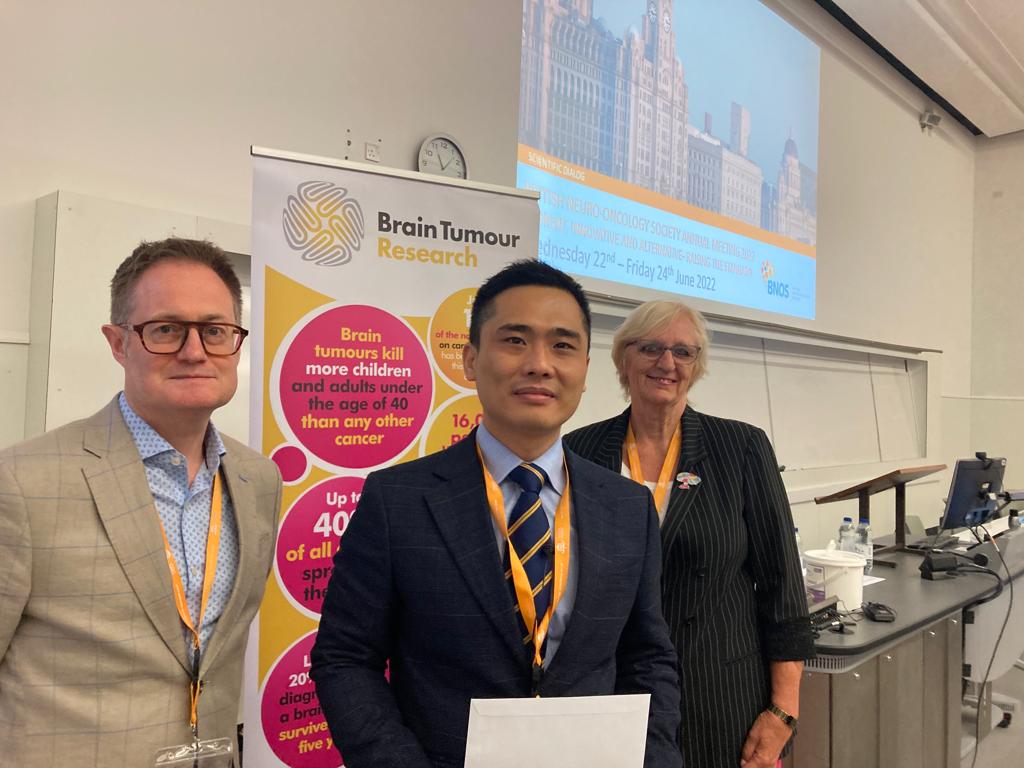
Chao Li (centre) 2022 winner of the Young Investigator of the Year Award

Dr Chao Li won the young investigator award and provided an insight into his work with AI and imaging. The highest scoring papers on hydrogels for drug delivery, molecular resistance mechanisms, and where patients die rounded off an excellent session. The winners of the prizes were announced, Amanda Fitzpatrick (Poster Clinical), Ross Carruthers (Poster Science), Georgette Tanner (Oral science), and Ash Keyoumars (Oral Clinical), and the meeting ended.

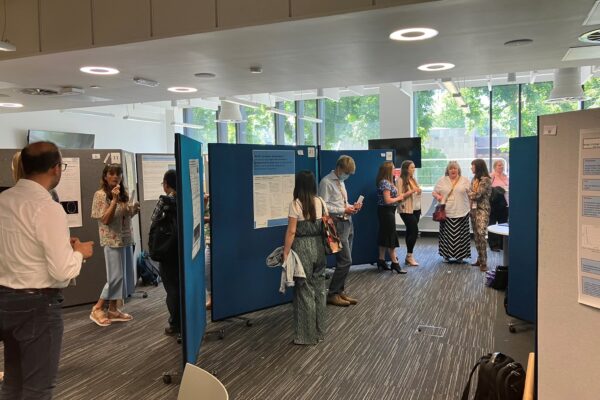
There were many highlights of the meeting, and this summary does not do justice to them all. There were 67 platform presentations, 35 invited speakers, and 53 poster presentations, who also provided a pre-recorded 3 minute summary. A short summary virtual meeting, specifically for patients, of a few of the highlights from this years meeting is planned.  A reminder that the invited speaker presentations will be available on the BNOS website in the BNOS Members educational area in due course. 

Finally, we heard about, and look forward, to BNOS Manchester next year – 5-7th July 2023.

Black book with the letters PhD along the spine

PhD opportunity at Cardiff University

By News

Functional heterogeneity of FGF receptors in glioblastoma cancer stem cells

About the project
A 3 year fully funded PhD studentship is available in the Astroglia Cell Biology Group at Cardiff University’s European Cancer Stem Cell Research Institute.

Glioblastoma (GBM) is the most frequent and most lethal type of brain cancer in adults, with a median survival of only 15-18 months. The poor prognosis of GBM is linked to cancer stem cells that can evade therapy and initiate tumour regrowth. GBM cell plasticity – the ability to adopt stem-like states that permit cancer cell self-renewal and therapy evasion – is affected by multiple cell-autonomous and non-cell-autonomous factors. Better understanding of the molecular mechanisms that govern GBM cell plasticity may lead to new and better treatments that can delay or prevent tumour recurrence.

We have previously demonstrated a regulatory feedback loop that maintains the identity of GBM stem cells (Jimenez-Pascual et al. Cancer Disc. 2019). As part of this feedback loop, the growth factor FGF2 is released in the extracellular environment and activates FGF receptor 1 (FGFR1) present on the cell surface of GBM stem cells, leading to downstream activation of stem cell transcription factors. Importantly, transcriptional profiling shows that approximately 30% of GBM patient tumours express signatures of FGF2/FGFR1 and stem cell transcription factors. We have further shown that GBM cells express other FGF receptors as well, but their functions remain largely obscure.

In this project, we will dissect the molecular functions of FGF receptors in GBM, particularly in GBM stem cells. We will characterise the expression of FGF receptors across patient tumours and cellular subpopulations using flow cytometry and functional in vitro and in vivo assays (Aim 1). We will use RNA-sequencing and other OMICs approaches to investigate mechanisms of cell plasticity in GBM cell populations expressing specific FGF receptors (Aim 2). CRISPR targeting of FGF receptors and candidate downstream effectors will validate their functions in GBM cell plasticity (Aim 3).

Visit the FindAPhD website for full details

A keyboard with the word JOB opportunities on one of the keys

Job opportunity: Surgical Neuro-Oncology Fellowship

By News

Applications are invited for a Surgical Neuro-Oncology Fellowship (post-CCT level), based at the Queen Elizabeth Hospital Birmingham.

The Trust has one of the most active clinical cancer programmes in the country, which is housed within the Cancer Centre building established in 2000 and the Clinical Research Facility. A major expansion of Trust Cancer Research infrastructure took place during 2008/9 with a new Cancer Trials team of 14 people being appointed to support research in this area

The post is full-time and may include “acting up” as a consultant with appropriate faculty support. 

FIND OUT MORE

Yorkshire brain tumour symposium 2022

By News

Discover how Yorkshire is leading the way in brain tumour research!

When: Tuesday 5th July 2022, 9am – 4pm
Where: The Met Hotel, Leeds LS1 2HQ

This jam packed day will feature world class researchers, doctors and clinicians from across the Yorkshire and Humber region who are all leading innovative research to find treatments, and ultimately a cure, for primary brain tumours.

Yorkshire’s Brain Tumour Charity are organising this event. Places are free, but limited, so you must pre-book your ticket.

To see the full agenda and book your free place visit their website.


BNA2023 International Festival of Neuroscience call for submissions

By News

BNOS are delighted to be partnering with the BNA for their sixth International Festival of Neuroscience on 23-26 April 2023 in Brighton, UK,

They would like to know what topics, speakers, research and techniques do you want featured?*

You can create the programme you want by submitting session proposals. There are two ways to submit content to the main scientific programme:

Symposia
Each symposium covers a specific area of neuroscience research. A symposium is 100 minutes in length and consists of four talks; each talk is therefore usually 20-25 minutes long.

Workshops
Workshops should focus on topics of wide interest (e.g. policy, careers, funding, grant-writing, publishing, reproducibility, short courses, neuroethics etc.) Each workshop is 100 minutes in length. Their format can include presentations, panel Q&A, small group discussion, worked examples, or other formats. There are usually 3-5 workshops in the Festival Programme.

Deadline for submissions is 31st May at 23:59 BST

Click here for more information and to submit your proposal

*All sessions must be reviewed and accepted by the Programme Organising Committee before being included in the programme.

BNA 2023 Festival of Neuroscience

Registration open for BNOS 2022

By News

Registration is now open for BNOS Liverpool 2022: Current, innovative and alternative. Raising the standard.
Wednesday 22nd to Friday 24th June 2022

REGISTER NOW

BNOS Liverpool 2022 is the first BNOS meeting in two years to return to being in person. The aim of the meeting is to define current standards, examine alternative treatments available, and to look to new and exciting future developments.

Amongst the many distinguished speakers at BNOS in Liverpool this year, we are privileged to have John Barnes speaking. John, a former professional footballer and manager, will talk about ethnicity and diversity after the society dinner, and has agreed to take questions afterwards. This is sure to be part of a thought provoking and entertaining evening. 

If you are a current BNOS member, you are eligible to a discount on registration fees. A code has been emailed to all current members. If you have not received this, please contact laura@bnos.org.uk 

The early bird registration deadline is Monday 23rd May 2022 at 23:59 GMT.

Registration closes Monday 20th June 2022

For full conference details, visit the the conference website. For any conference-related queries, please contact info@bnosconference.co.uk 

If you’re on twitter, follow us @BNOSOfficial and search #BNOS2022 

If you would like to join BNOS, or renew your membership, please Join Online Now

We are also delighted to extend a warm thank you to this year’s conference sponsors.

Platinum: Novocure
Gold: Brainlab and Brain Tumour Research
Silver: Inomed, Medac Pharma and Vitoflo

PLATINUM SPONSOR

GOLD SPONSORS