Latest news from BNOS and across the neuro-oncology network

BNOS Council vacancies

By News

We are inviting expressions of interest for the following roles on BNOS Council as the current post holders approach the end of their terms:

  • Junior Representative (ST3+ level)
  • Neurology Representative

No previous experience in a council or committee-type role is necessary, but you will need enthusiasm and ideas to help develop BNOS, as well as time to commit to the role to put ideas into action. You must also be able to attend Council meetings which are held three times a year (a mixture of in person and virtual) as well as the Annual General Meeting (AGM) which is held during the BNOS Annual Conference, and contribute to discussions at the meetings.

The posts will commence in summer 2026 for an initial three-year term, with the possibility of re-election for a further term.

HOW TO APPLY:
Please submit a 1-page expression of interest stating which role you would like to be considered for, any relevant experience and how you will contribute to Council and to BNOS.

Send your application to administrator@bnos.org.uk by 23:59 on Tuesday 19th May.

Election to the posts will be carried out anonymously via the BNOS membership. In the event that only one application is received for a role, this will be reviewed by the Executive team and if deemed appropriate, the applicant will be directly appointed to the role.

If the successful applicant is not already a BNOS member, they will be required to join the BNOS membership and maintain a current membership throughout their term of office.

If you have any questions or would like to speak to the current post holder before applying, please contact us on administrator@bnos.org.uk and we will put you in touch.

International Brain Tumour Alliance logo

IBTA e-News

By News

Latest news from The International Brain Tumour Alliance (IBTA) – a global network founded in 2005 as a dynamic worldwide community for brain tumour patient organisations and others involved in the field of neuro-oncology.

The IBTA is primarily an advocacy and awareness-raising organisation with contacts in 112 countries around the world. Each month the IBTA produces and circulates a monthly digital bulletin for the international brain tumour community. The latest e-News can be found below.

April 2026 e-News
March 2026 e-News
January/February 2026 e-News
November/December 2025 e-News
September/October 2025 e-News
August 2025 e-News

To view previous IBTA e-News updates, please visit the IBTA e-News Archive.

ECR Grant Workshop Project Outcomes

By News

In April 2025, BNOS ran a Grant Workshop for Early Career Researchers in Neuro‑Oncology; an event made possible through dedicated sponsorship that enabled pump‑prime funding for two ECR‑led research projects. Both 6-month projects have now reached completion. We are pleased to present a summary of their outcomes and the progress achieved through this initiative.

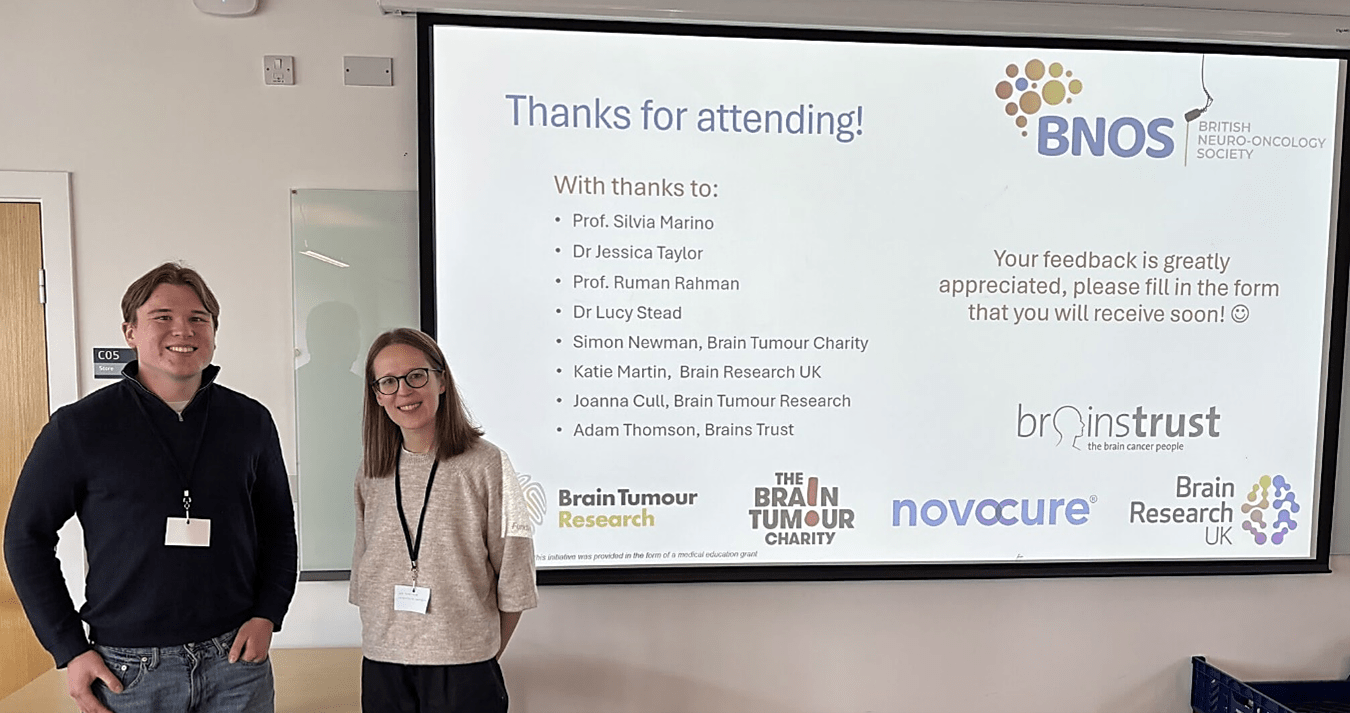
Josh Killelea (PhD Student, Imperial College London, pictured left) and Une Kontrimaite (PhD Student, University of Nottingham, pictured right) led a project titled Evaluating metabolic effects of electroactive drug delivery in a 3D glioblastoma co-culture model.

“This project aimed to evaluate the performance of a voltage-responsive electroactive drug delivery device using a biologically relevant, patient-derived 3D glioblastoma model that mimics key features of the in vivo tumour microenvironment. The electroactive device was applied to 3D glioblastoma spheroids to assess its biological effects compared with passive drug release and conventional drug treatment. The key outcome was the identification of optimal stimulation conditions that enabled reproducible drug release from the electroactive device. Metabolic profiling demonstrated that drug delivered via the voltage-responsive device induced changes in cancer cell metabolism that were comparable to those observed with standard IC₅₀ drug treatment, indicating effective therapeutic delivery. In contrast, glioblastoma invasive margin cells exhibited a distinct metabolic response, highlighting regional tumour heterogeneity. Astrocytes showed minimal metabolic alterations, suggesting a lower impact on non-cancerous brain cells. Importantly, the unloaded electroactive device alone induced negligible metabolic changes, confirming its biocompatibility.

Overall, this study demonstrated the feasibility of electroactive, voltage-controlled drug delivery in clinically relevant glioblastoma models and established a foundation for future development of targeted, on-demand therapeutic strategies through interdisciplinary collaboration.”

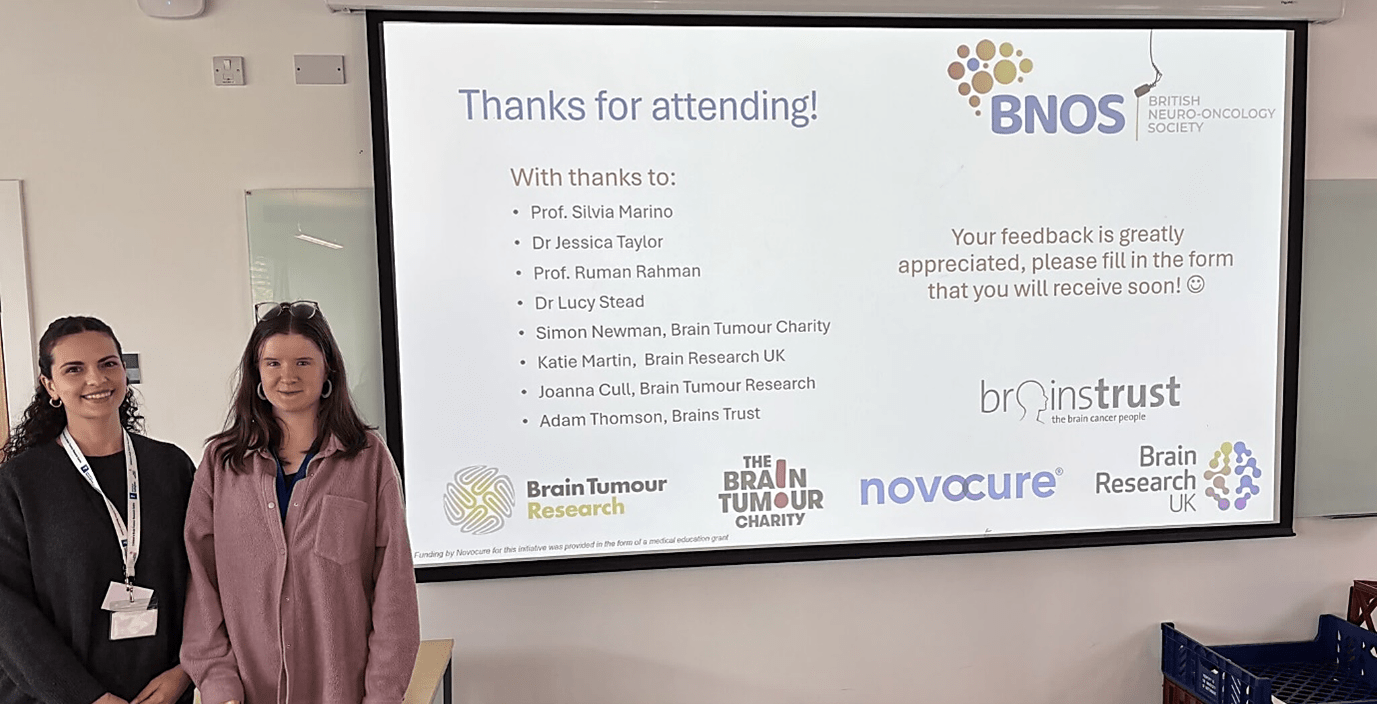
Dr Alina Pandele (Post-Doctoral Research Fellow, University of Nottingham, pictured left) and Sophie McCann (PhD Student, University of Nottingham, pictured right) led a project titled Exploring the role of hypoxia-driven extracellular vesicles in mediating neuron-tumour communication in paediatric brain tumours.

“In this project, we profiled hypoxia-associated extracellular vesicles (EV) protein signatures in two patient-derived paediatric brain tumour models, medulloblastoma and posterior fossa ependymoma. We cultured these cells at 21% or 1% O₂, isolated EV-enriched fractions by size exclusion chromatography and profiled EV output and protein cargo alongside matched cell lysates. EV concentration and modal diameter did not differ significantly between conditions, although both models trended towards increased EV release and smaller EVs under hypoxia. Qualitative EV proteomics identified oxygen-associated differences in detectable EV cargo, particularly in our ependymoma model (EPN11). Matched lysate proteomics showed a strong hypoxic metabolic shift in EPN11, with increased glycolysis/glucose metabolism and reduced mitochondrial pathways including fatty acid beta-oxidation and the TCA cycle, while our medulloblastoma line showed minimal change. Overall, this work is the first step towards defining how hypoxia alters EV secretion and cargo. The outputs are highly relevant for understanding hypoxia-driven pathways, with ongoing work looking at increasing EV yield to enable quantitative EV proteomics.”

Both teams plan to share their results at national conferences and are preparing manuscripts for submission to peer‑reviewed journals in the near future. They also intend to use these findings to support applications for further funding to advance their respective research programmes. BNOS extends its best wishes to both groups as they continue to advance their research initiatives following the workshop.

BNOS 2026 registration open!

By News

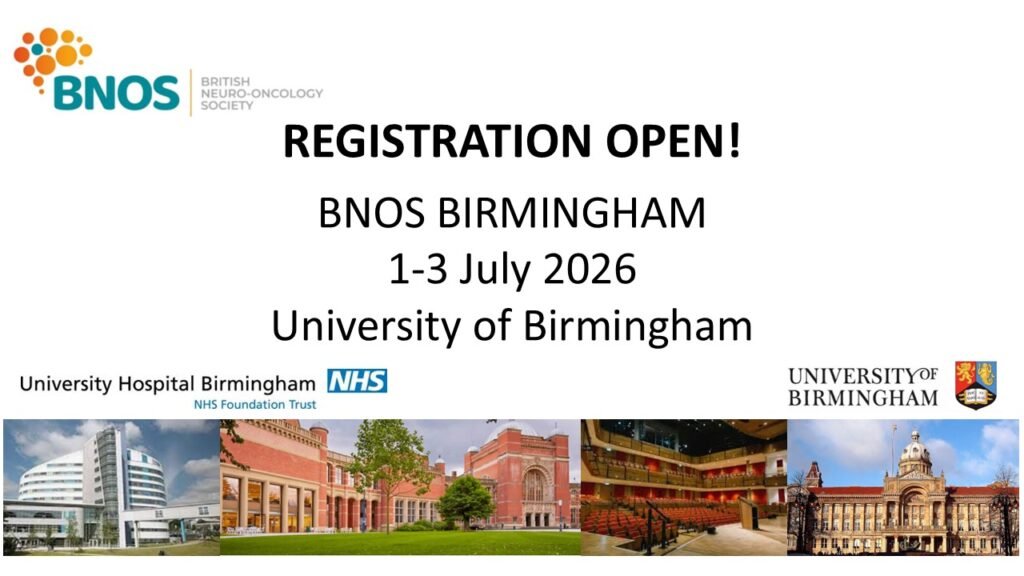
We are thrilled to announce that registration for BNOS 2026 is now open! The event is taking place at the University of Birmingham from 1-3 July.

This year’s theme, “Local Therapies for Brain Cancer,” celebrates the exciting progress at the crossroads of neuro-oncology, biology, and technology, advances that are transforming treatment approaches and offering new hope for patients.

​Building on the success of previous meetings, BNOS 2026 will explore emerging opportunities and challenges in biotechnology, featuring sessions that share the latest insights, innovations, and best practices across this rapidly evolving field. View the outline programme.

Social programme:

  • Networking and poster reception with drinks and nibbles. Wednesday 1 July, 17:30-19:00
  • The Birmingham Boron Neutron Capture Therapy Facility. Timed visits, limited places. Secure your spot via the registration page. Wednesday 1 July 17:30-19:00
  • BNOS 5km fun run. Thursday 2 July 07:00
  • Gala dinner at The Council House. A fun night with complimentary drinks, delicious food, photo booth and silent disco, offering a great way to dance without interrupting conversation. Thursday 2 July 19:30-23:00

IMPORTANT INFORMATION
Subsidised registration is available for BNOS members only. If you are eligible (e.g. AHP, nurse, basic scientist, student, etc) you will receive a link via email to register at the subsidised rate. If you have not received this, please contact administrator@bnos.org.uk

REGISTER FOR BNOS 2026
British Neuro-oncology Society

Transforming molecular neuropathology for adult brain tumour patients in the UK

By News

Transforming molecular neuropathology for adult brain tumour patients in the UK: Insights on implementation, adoption, and patient access (2021-2024). 

This new paper by Kurian et al. published in Neuro-Oncology Practice highlights the geographic disparities that persist in access to genomic testing, particularly in devolved UK nations.

The authors conclude that variations in testing and snap freezing, and bottlenecks in diagnostic TATs, emphasize the need for: (1) targeted training and investment in rapid technologies to ensure sustainable service delivery; (2) focus on remaining inequities and (3) continued engagement with national benchmarking initiatives.

Read the full paper here

BNOS 2025 Patient and Carer Edition

By News

The 2025 Patient and Carer Edition was held on 6th October 2025 as a follow-up to our annual conference in London earlier in the year.

Our guest speakers presented on a selection of topics from the conference that would be of interest to people living with brain tumours, and their carers.

Speakers
  • Enablers and barriers to inclusive trial participation, Dr Helen Bulbeck
  • New treatments including those that use the body’s own defences, Dr Karin Straathof
  • How smart computers are helping doctors treat brain tumours, Dr Jamie Dean
  • Better ways to analyse brain tumours and guide treatments, Dr Thomas Millner

We are very grateful to brainstrust for their help in running the event.

Tessa Jowell AHP Research Fellowships

By News

The Tessa Jowell Brain Cancer Mission is pleased to announce that on Friday, 4 July, applications will open for the Tessa Jowell AHP Research Fellowships – a new, part-time, fully funded fellowship programme developed in partnership with the National Institute for Health and Care Research (NIHR). We would greatly appreciate if you could share this opportunity widely within your network (see flyer), so that as many eligible AHPs as possible are aware and have time to prepare their application.

Why Tessa Jowell AHP Research Fellowships?

This exciting new opportunity for Allied Health Professionals (AHPs) working in or closely with NHS neuro-oncology services responds to a critical need for greater neuro-oncology-specific research in AHP-led care for patients with a brain tumour. Currently, the limited evidence base in this area has limited the development of national guidelines, created service variability, and contributed to the undervaluing of AHP roles within the brain tumour care pathway. The Fellowship, therefore, focuses on empowering AHPs in their personal and professional development by providing training and support to engage in high-quality research, strengthening the evidence base for brain cancer pre-habilitation, rehabilitation, and supportive care. It seeks to create a new generation of research-active AHPs empowered to improve care for patients with a brain tumour, through practices grounded in the latest scientific evidence.

Key Details

Important dates:

Fellowship structure:

A part-time, fully funded clinical academic fellowship to build research capacity and lead a project in neuro-oncology AHP care, alongside your current clinical role.

Who can apply?

AHPs (Band 6 or above) working in or closely with NHS neuro-oncology services in England and Wales*. Applications are welcome from APHs with experience in research as well as those new to research.

*We are working closely with Scottish Government to bring these opportunities to Scottish healthcare professionals in the future.

Fellowship award:

The Fellowship award will provide up to £77,775.32 per year for up to four years, to cover:

  • 30-50% of the AHP’s salary (band 6 and above, full time equivalent) and employment costs
  • Supervision costs
  • Research and other costs (e.g. printing, conference attendance)
  • TJBCM administrative costs

For Further Information

Programme webpage: https://www.tessajowellbraincancermission.org/strategic-programmes/ahp-research-fellowship/
Register for the next Q&A session: https://events.humanitix.com/ahp-research-fellowship-q-and-a-session-1
Fellowship Flyerplease circulate this with your network

If you have any questions or would like further information, please reach out to Camille.goetz@tessajowellbcm.org and Lauren.lankhuijzen@tessajowellbcm.org.

About the Tessa Jowell Brain Cancer Mission (TJBCM)

The TJBCM is a national covening body delivering a portfolio of transformational programmes to accelerate brain cancer research, improve treatment and care for patients and train and connect the Neuro-Oncology workforce. The Mission brings together expert NHS clinicians, nurses, AHPs, academics and working in collaboration to deliver its programmes and is funded and supported by the NIHR, The Tessa Jowell Foundation, CRUK, The Brain Tumour Charity, Brain Tumour Research, Brainstrust, Brain Tumour Support, BrainWaves Northern Ireland, Cancer Research Wales, GOSH Charity and Children with Cancer.

Mentorship programme – call for mentors

By News

A new mentorship programme is launching this autumn and we are looking for mentors to support it.

The inaugural programme will run for one year beginning autumn 2025. Mentors and mentees will be paired according to goals. A call for mentees will go out this autumn.

WHO CAN BE A MENTOR?
We are seeking clinicians and researchers across neuro-oncology, including allied health professionals, early career researchers and post-docs.

BENEFITS
* Access to accredited training programmes
* Chance to help develop budding neuro-oncology professionals

HOW WILL THE PROGRAMME WORK
We will ask participants to generate pen portraits so we can match up mentors/mentees based on their respective expertise and needs.
The programme will run for 12 months and each mentee will have an achievable goal in mind which they can work towards with their mentor.

SIGN UP TO FIND OUT MORE

Committee updates June 2025

By News

Clinical Committee

Over the past few months, the BNOS Clinical Committee have been very active towards their aim of providing a valid and impartial clinical opinion regarding new treatments.

Two new position statements have been written on the current status of access and evidence for Vorasidenib and Tumour Treating Fields (TTF). You can access these here:

In addition, to ensure equitable access to treatments, surveys were circulated to members on the managed access programme for Vorasidenib, and to assess clinical support for TTF. Updates on the results of these surveys will be shared in due course.

To improve access to new drugs for brain tumour patients, we are lobbying NICE for access to BRAF inhibitors for BRAF mutated tumours in adults, to align with the paediatric guidance.

To ensure new treatments are assessed in a timely way for our patients, we are active stakeholders in the current NICE technology assessment of Vorasidenib. We submitted comments and applied to be a stakeholder at the NICE review meeting, although unfortunately we were not selected to attend.

Academic Committee

The Academic Committee have also been very active, organising a number of brand new events for diverse sections of the community.

Webinars:

They delivered online Translational Research Webinars on immunotherapy for GBM, preclinical models in neuro-oncology research, medulloblastoma, personalised treatment and a joint session with the British Neuropathology Society on next generation diagnostics. They were joined by over 100 attendees with speakers from Leeds, Manchester, Vienna, New York, Nottingham and Houston, demonstrating a broad international reach and impact.

Allied Healthcare Professional training day

This was held online on 4th March to address the needs of professionals working in neuro-oncology outside of the main annual meeting. Topics covered included end of life care, whole genome sequencing and awake craniotomy. There were more than 50 sign ups and the sessions were recorded and made available to members via the Members’ Area website.

Grant workshop for Early Career Researchers

This event was another first for BNOS, supporting a vital part of the society’s breadth and membership. It was held in person at Nottingham University on 25th April. Over £10,000 in pump priming support was obtained from charity and industry to support the most promising collaborative projects arising from the day.

Future work

This involves launching a mentorship program to support society members across all career pathways in neuro-oncology, and there will be a dedicated “Trials Update” session at BNOS 2025 to inform members of open and upcoming clinical trials in the UK and spotlight excellence and opportunities.

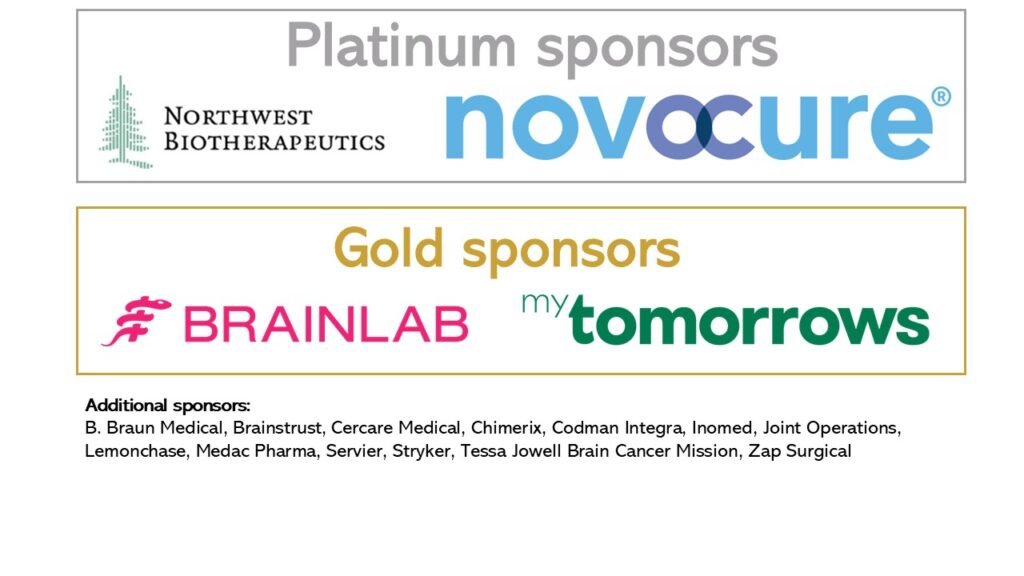
BNOS 2025 sponsors

By News

We are very much looking forward to our next annual scientific meeting being held in London from 18-20 June and we would like to thank all our sponsors for their support in helping make this event possible.

Platinum sponsors

Gold sponsors

Additional sponsors:
Braun Medical, Brainstrust, Cercare Medical, Chimerix, Codman Integra, Inomed, Joint Operations, Lemonchase, Medac Pharma, Servier, Stryker, Tessa Jowell Brain Cancer Mission, Zap Surgical