2026 Michael Bryan
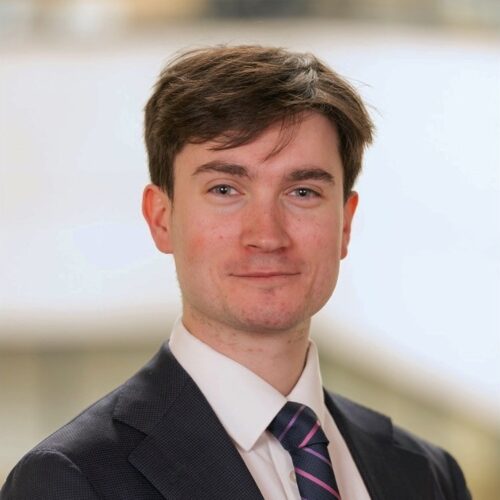
Michael Bryan is a Cancer Research UK (CRUK) MB-PhD Fellow at the University of Oxford. His research focuses on developing personalised immunotherapy approaches for glioma, with a particular interest in neoantigen vaccines. His work explores how tumour evolution and immune escape can be incorporated into treatment design, and how combination approaches, including synthetic lethality, may improve the effectiveness of immunotherapy.
Michael is also an Honorary Doctoral Researcher in the Department of Neurosurgery at the University of Cambridge, where he works with Mr Richard Mair to analyse clinical glioma cohorts.
Alongside his research, Michael serves as a Governor of Guy’s and St Thomas’ NHS Foundation Trust, where he sits on the Cancer and Surgery Clinical Group Board. Through these roles, he is committed to supporting the translation of research into improved care for patients with brain tumours.
2025 Dr Phoebe McCrorie

Phoebe is a Postdoctoral Research Fellow at the University of Nottingham, currently investigating the metabolomic landscape of the invasive margin in IDH-wildtype glioblastoma to identify therapeutic vulnerabilities. Her research expertise spans both adult and paediatric brain tumours, with contributions to projects in drug delivery, transcriptomics, metabolomics, and proteomics. She has also led independent studies, resulting in her first senior author manuscript, now under review.
In addition to her research, Phoebe serves as co-Chair of the BNOS Academic Sub-Committee. In this role, she has spearheaded several initiatives, including a national mentorship programme, a grant-writing workshop for early career researchers, and a webinar series designed to promote community engagement and knowledge exchange. Committed to supporting the neuro-oncology research community, Phoebe aims to continue fostering early career researcher involvement and retention through these efforts as her career progresses.
2023 Dr Tim Ritzmann
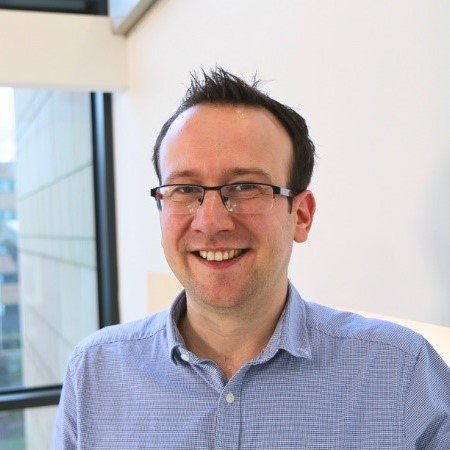
Tim is a National Institute for Health and Care Research (NIHR) Academic Clinical Lecturer in Paediatric Oncology at the University of Nottingham, where he and his colleagues are working to understand the underlying biology of paediatric ependymoma.
Ependymoma is the second most common high-grade brain tumour in children. It is an aggressive tumour which has its worst impact on the youngest children. For several decades there have been no significant leaps in improvement of standard of care therapy. The therapies that we currently use are not effective enough in delivering cures, particularly when the tumour relapses. The current therapies also risk damaging the developing brain.
Tim has research interests in the underlying immunobiology of paediatric ependymoma in primary disease and at recurrence, work for which he was awarded the UK’s Children’s Cancer and Leukaemia Group Young Investigator Award in 2022. Tim also works as part of the team delivering the Ependymoma Multidisciplinary Advisory Group (EMAG), Biological Markers of Ependymoma in Childhood and Adolescence study (BIOMECA) and the SIOP Ependymoma II clinical trial in the UK and has recently collaborated on studies delineating the molecular subtypes of PFA ependymoma, identifying a group of posterior fossa ependymoma with ACVR1 mutations and the effect of cannabidiols in models of ependymoma and medulloblastoma.
2022 Dr Chao Li
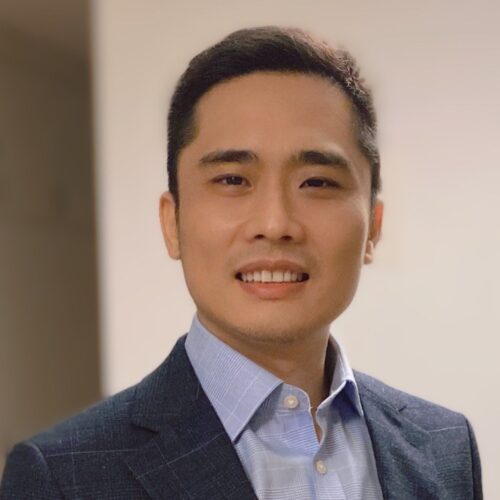
Dr Chao Li is a Senior Research Fellow at the University of Cambridge. His research focuses on developing data science technologies. particularly using advanced neuroimaging and artificial intelligence (AI), to characterise brain tumours and benefit patient care. His passion is to bridge the gap between data science and real-world clinical application.
His research has been published widely in both clinical and technical venues, e.g., Nature Machine Intelligence, Neurosurgery, and MICCAI. He has been awarded the Guarantors of Brain Fellowship and the NIHR AI Award, supporting his work in developing image-based AI models for precision neuro-oncology.
2021 Dr John Apps

John Apps’ research interest is in how to use advances in molecular understanding of cancer to improve the lives of, and treatments for, brain tumour patients, particularly children. His early research and PhD has predominantly been laboratory based, focussing on craniopharyngioma, where John identified a close relationship with the developmental biology of the tooth.
John has identified novel therapeutic approaches, particularly a potential role of MEK inhibition in adamantinomatous craniopharyngioma, that are now being taken forward to clinical trial.
As a Cancer Research UK Clinical Trials fellow, John has contributed to a range of clinical studies and trials across neuro-oncology, including the Tessa Jowell Brain Matrix Platform study. He has recently been appointed as an NIHR Academic Clinical Lecturer at the University of Birmingham, which will enable John to continue to pursue a career in translational neuro-oncology.
2019 Maria Niklison Chirou
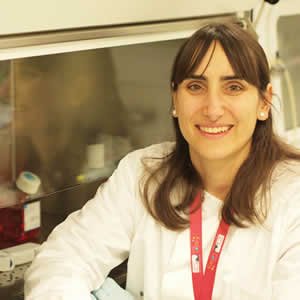
Maria Victoria Niklison Chirou is a Research Fellow at Queen Mary University of London. Her research focuses on the development of novel drugs for the treatment of childhood brain tumours. She currently works on medulloblastoma, a paediatric brain tumour and a major cause of mortality in children. In 2013, Maria was awarded with the prestigious fellowship from Children with Cancer UK to work on metabolic adaptation of medulloblastoma tumours. She recently published, a ground-breaking research in the high impact journal Genes & Development. She identified the p53-family member, p73, as a crucial factor causing “glutamine addiction” in aggressive medulloblastoma.
2018 Rasheed Zakaria
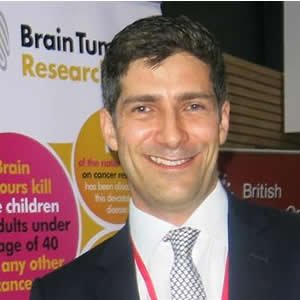
Rasheed Zakaria is a trainee neurosurgeon based at The University of Liverpool, who took time out of clinical training to undertake research in brain metastases – an area of clinical unmet need. Using pump-priming funds he was successful in securing a 12 months Research Fellowship from the Royal College of Surgeons of England, followed by a highly competitive and prestigious Clinical Research Fellowship from the Medical Research Council. His research has been presented at national and international neurosurgery and neuro-oncology meetings and has been published in high impact factor peer reviewed journals (e.g. Cancer Research; IF 9.3). The findings of a potential non-invasive biomarker of response and outcome in brain metastasis will be tested in a planned prospective study.
2017 Harry Bulstrode
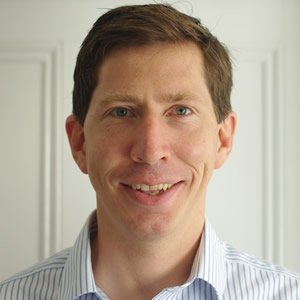
Harry Bulstrode is Clinical Lecturer at the University of Cambridge, and Honorary Specialist Registrar in Neurosurgery at Addenbrooke’s Hospital. His main research interest is in glioma stem cell biology, especially the similarities between the transcription factor programs which control glioma stem cells and neural stem cells. His PhD work, conducted in Steve Pollard’s labs in London and Edinburgh, was concerned with the roles of neural developmental transcription factors FOXG1 and SOX2 in establishing and maintaining glioma stem cell identity. He is now working in David Rowitch’s lab in Cambridge and has recently secured a CRUK Pioneer Award to investigate the ability of Zika Virus to infect glioma stem cells, seeking insights applicable to the development of future adjuvant therapies.
2014 Ruman Rahman
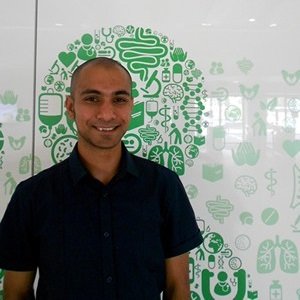
Dr Ruman Rahman, Assistant Professor in Molecular Neuro-Oncology, Faculty of Medicine & Health Sciences, The Children’s Brain Tumour Research Centre, Nottingham. “Glioma Heterogeneity: from Modelling to Therapy”
2011 Ally Rooney
Dr Ally Rooney, trainee in neuropsychiatry, University of Edinburgh
2010 Sara Piccirillo
Dr Sara Piccirillo, Research Associate at the University of Cambridge